
At MBAProjectWorld, we specialize in providing high-quality, tailor-made MBA project solutions for students across various universities. Our services span across different specializations so that all MBA students have the right project to excel in their academic curriculum.
Explore Our Project Report Samples
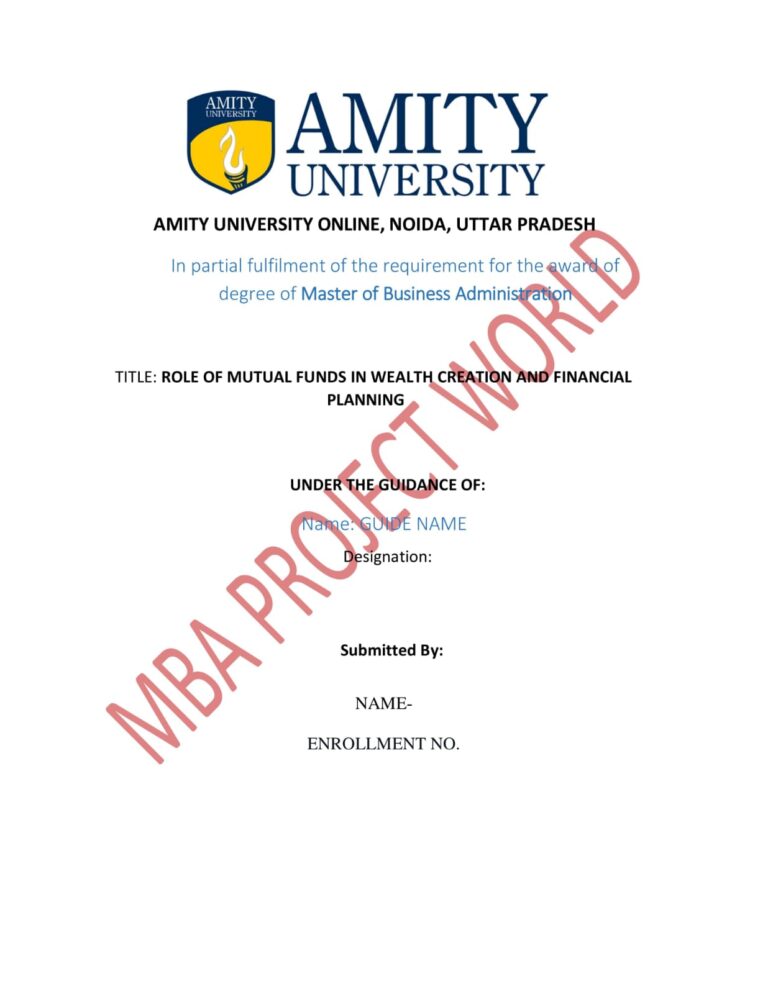
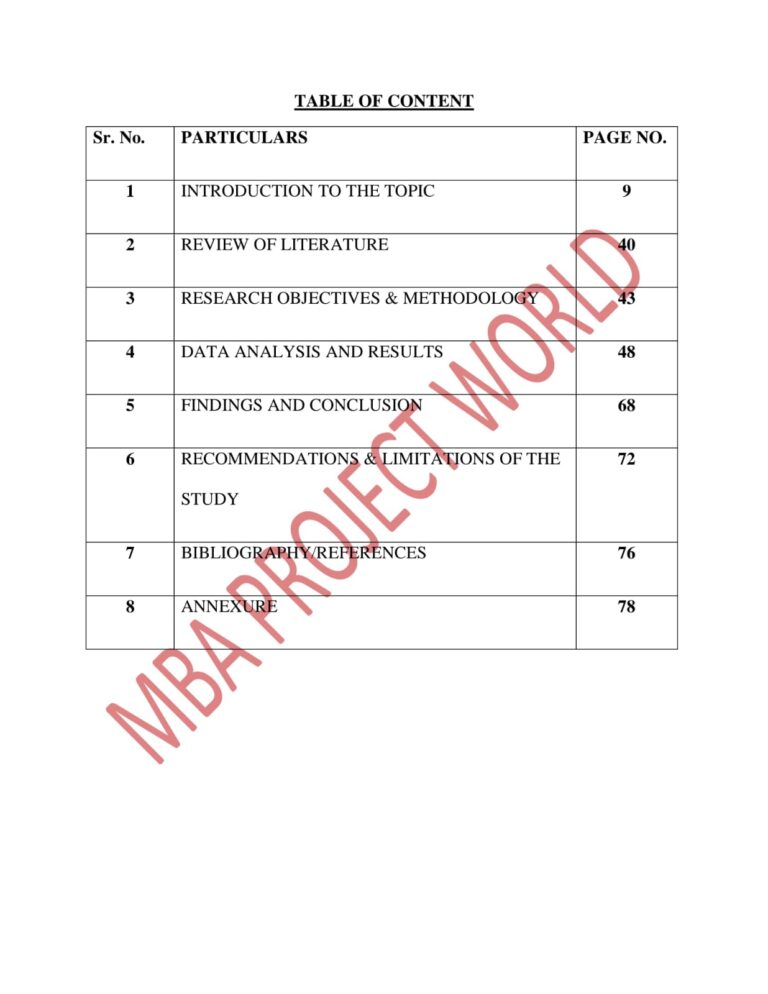
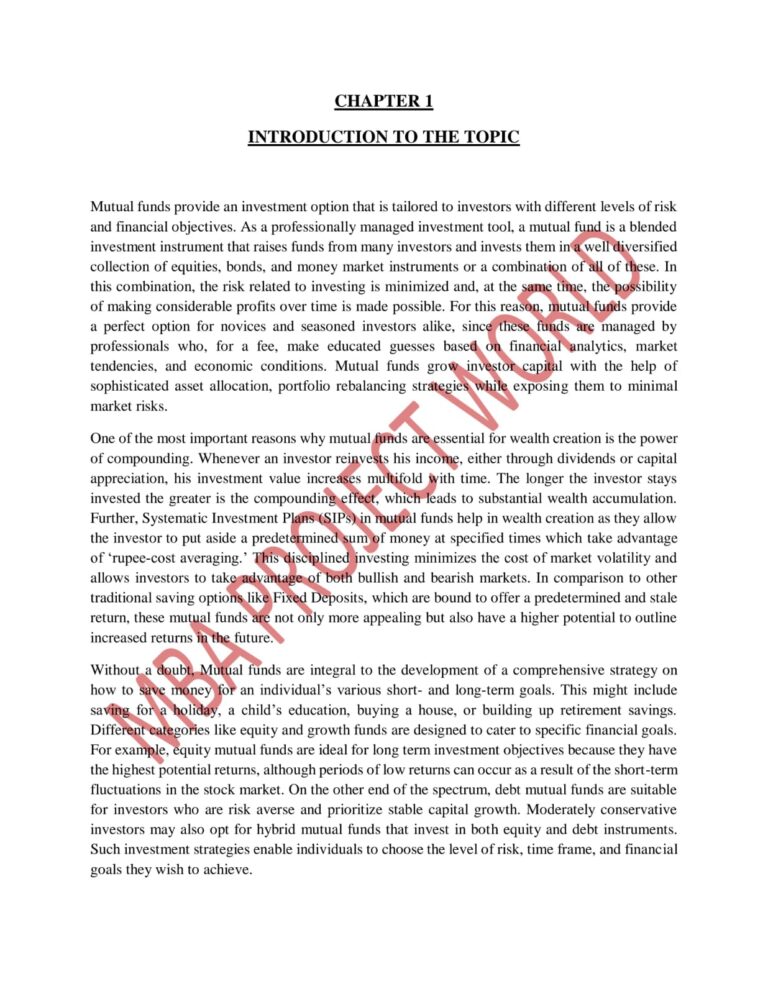

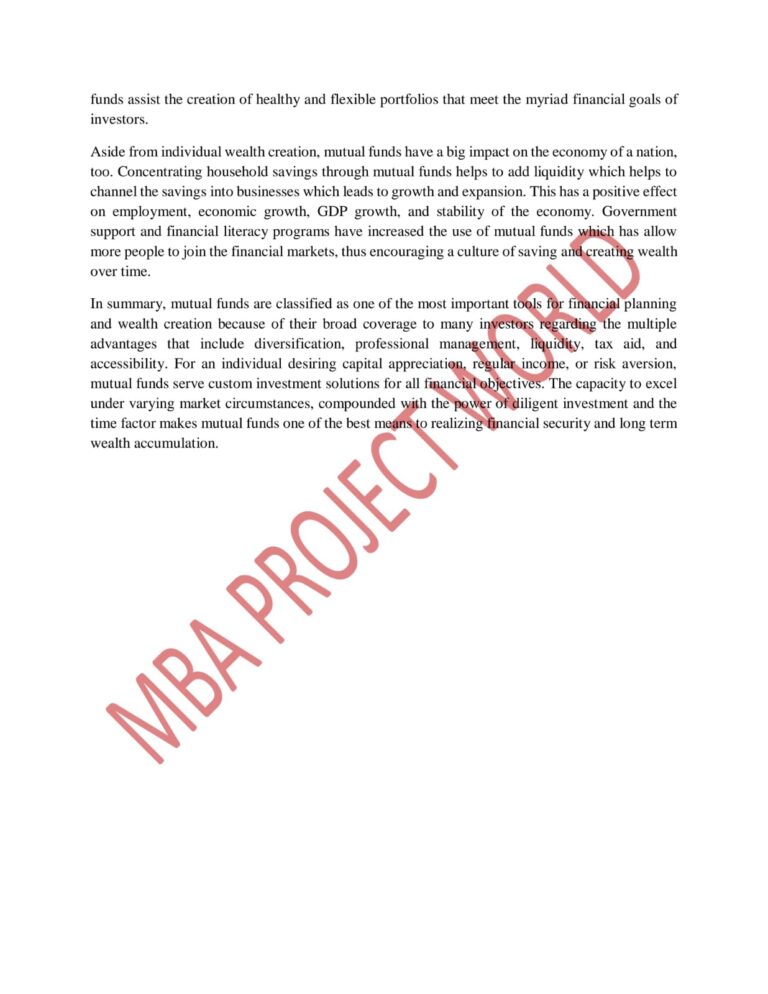
Need excellent MBA projects for your final year? MBAProjectWorld provides tailored, university-approved, and 100% plagiarism-free MBA project reports in Marketing, Finance, HR, Operations, and others. Our experts ensure every project is well-researched, well-formatted, and of the highest quality to meet your university standards. Place an order for your MBA project today and ace top grades with ease!.
MBA PROJECT REPORT COMPONENTS
1. Introduction:
A good introduction is the foundation of any successful MBA project. It establishes the main research problem, highlights the significance of the study, and states the objectives and scope. This section makes sure that your project aligns with actual business problems and academic needs.
Key Elements of a Good Introduction:
- Research Context: Industry, company, or market trend background.
- Problem Statement: What business problem is the project trying to solve?
- Objectives of the Study: The well-defined objectives that the study seeks to attain.
- Scope & Relevance: Why is this study important to businesses, scholars, and practitioners in the industry?
By defining these areas clearly, your introduction lays the foundation for thorough analysis and insightful findings.
2. Company or Industry Analysis:
This section gives an in-depth description of the company or industry being researched, e.g., market positioning, competition, and strategic expansion opportunities. In-depth analysis of the industry adds credibility and value to the project.
Key Elements:
- Company Overview: Company history, mission, vision, and major milestones.
- Market Positioning: Brand perception, target segment, and competitive advantage.
- Industry Trends: Existing market trends and upcoming business opportunities.
Strategic Frameworks:
- SWOT Analysis: Strengths, Weaknesses, Opportunities, and Threats.
- PESTEL Analysis: Political, Economic, Social, Technological, Environmental, and Legal business impacting factors.
- Porter’s Five Forces: Competitor rivalry and industry appeal.
Using such models, firms will be able to understand the business environment evidenced based and take well-informed decisions.
3. Literature Review:
Literature review incorporates knowledge from business case studies, industry studies, and scholarly studies. It becomes your MBA project’s theoretical framework through reading current studies and identifying gaps in research.
A Good Literature Review Includes:
- Review of Previous Research: An assessment of existing studies that pertain to your subject.
- Theory Frameworks: Most influential business theories applicable to marketing, strategy, finance, HRM, or operations.
- Industry Trends & Innovations: New business models, digitalization, and disruptive technologies.
- Research Gaps: Areas of research that are yet to be explored and where your research can provide new insights.
- Good literature review adds credibility to your project and provides a clear direction to your research.
4. Research Methodology:
A proper research methodology ensures accuracy, validity, and reliability of your MBA project results. This section describes the research methodology, data collection techniques, and analytical tools employed in the research.
Key Research Methodology Elements:
- Research Approach:
- Quantitative: Statistical analysis of data through surveys, statistical packages, and numbers.
- Qualitative: Interviews, case studies, and business observations.
- Mixed Methods: Use of both for detailed information.
- Data Collection Techniques:
- Primary Data: Surveys, interviews, and focus groups.
- Secondary Data: Financial reports, company reports, industry reports.
- Sampling Techniques: Choosing the appropriate group of participants for accurate representation.
- Analytical Tools:
- SPSS, Excel, Tableau: For statistical analysis and data visualization.
- Thematic Analysis: For qualitative interpretation of data.
This systematic process ensures your research is valid, well-documented, and effective.
5. Data Analysis and Interpretation:
This section exemplifies the results of your research, translating trends, patterns, and business understanding. Good data analysis transforms raw data into good business plans.
- Statistical Tools: SPSS, Excel, Python for quantitative research.
- Visual Representations: Graphs, charts, and tables to better understand.
- Comparative Analysis: Benchmarking industry standards and competitive strategies.
- Trend Analysis: Identifying areas of growth and shifts in the market.
- Data interpretation bridges the findings to the research objectives, providing practical solutions to business issue
6. Research Findings:
This segment presents the culmination of findings from analyzed data, combining the top business strategies, fiscal realities, and operating recommendations.
Key Findings:
- Business Performance: Trends in revenue, profitability, and market growth.
- Consumer Insights: Customer behavior, brand loyalty, and behavioral patterns.
- Operational Efficiencies: Cost reduction measures, process improvements.
- Strategic Recommendations: Implementable items for business expansion.
- Providing concise, fact-based findings, this segment allows businesses to make well-informed decisions and drive future growth.
7. Conclusion:
The conclusion captures the findings and provides an outline of the wider implications of the research for business and industry players.
Components of a Good Conclusion:
- Summary of Findings: Brief summary of study outcomes.
- Practical Implications: Suggestions for companies to apply these findings to their growth.
- Future Research Scope: Where future research and investigation should be focused.
- Final Thought: A good final statement reminding us why the research is important.
Check For MBA Specializations
Get Your Custom MBA Project Report in 6 Easy Steps
Share your university project guidelines and your selected topic. If you haven't, just state your area of specialization, and we will assist you in coming up with the best topic.
No extra fees, no additional charges—just a clear price quotation sent to your WhatsApp for instant confirmation.
To start your project, provide 50% of the entire payment upfront. Simple, secure and easy payment offers an effortless transaction.
When you pay us, our group of experts immediately commences development on your report while ensuring that it is created as per university regulations and presented to you in good time.
Prior to finalizing, we will provide you with a full video preview of your final project so that you can view the content and verify that all is as per your expectation.
Make the balance payment, and we will provide your final project report in a ready-to-submit, polished form.
At MBAProjectWorld, we make MBA project writing easy, maintaining originality, quality, and timely delivery!
FAQs (Frequently Asked Questions)
What services does MBAProjectWorld offer?
MBAProjectWorld offers expert support in preparing MBA project reports, i.e., final-year projects, major projects, and minor projects of all specializations. Our support entails in-depth research, well-structured content, genuine reports, and correct formatting. The final product comprises the project report, plagiarism check report, viva preparation guide, and all ancillary documents.
How do you ensure quality and genuineness in the reports?
We maintain strict quality check procedures, such as extensive research, plagiarism checking, and compliance with university standards. Each report is prepared by subject experts to impart originality, relevance, and academic value.
How much do I pay for an MBA project report?
We charge differently based on the subject difficulty, specialization, and degree of research needed. We have reasonable prices with clear pricing. You can request a quote via WhatsApp for a break-up.
How quickly can the project be delivered?
Delivery timelines are project requirement-dependent. Nevertheless, we typically deliver quality reports in 7 to 14 days. If the situation demands, urgent projects are also acceptable.
Do you provide post-delivery support for revisions or queries?
Absolutely! We provide post-delivery assistance for minor corrections, clarifications, and any question pertaining to the project. Our aim is to make sure you are totally satisfied with the final report.