Jain Online University MBA Project
MBA Project World – Expert Project Report Services for Jain Online University Students

At MBA Project World, we specialize in crafting tailored MBA and BBA project reports for Jain Online University students. Our expert team understands the university’s specific guidelines and offers personalized support for every subject. We deliver clear, concise, and well-researched reports that are easy to understand and meet academic standards.
Your One-Stop Project Partner – MBA Project World
At MBA Project World, we make your Jain Online University project journey smooth, fast, and stress-free. Whether you're pursuing an MBA or BBA, we’ve got you covered from start to finish —
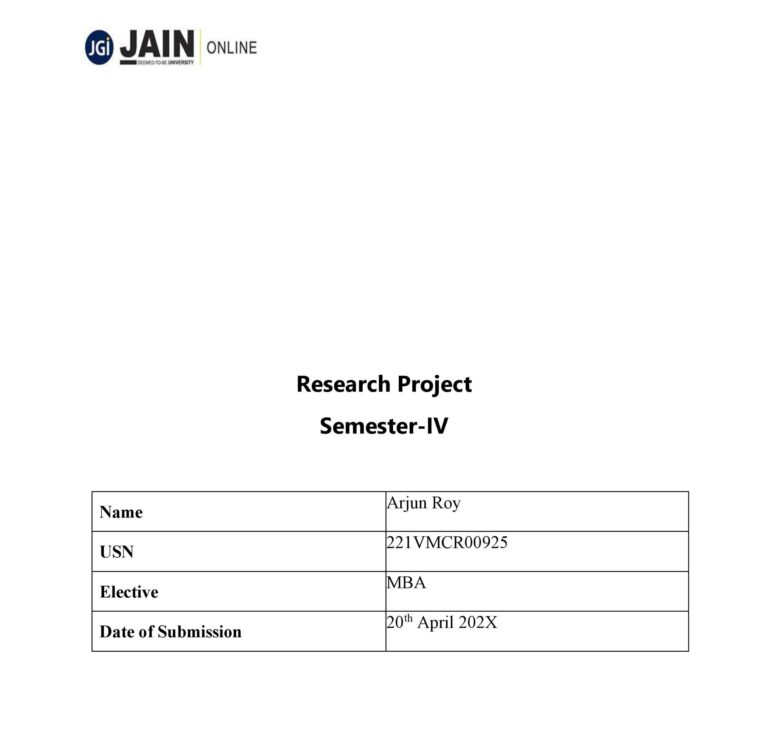
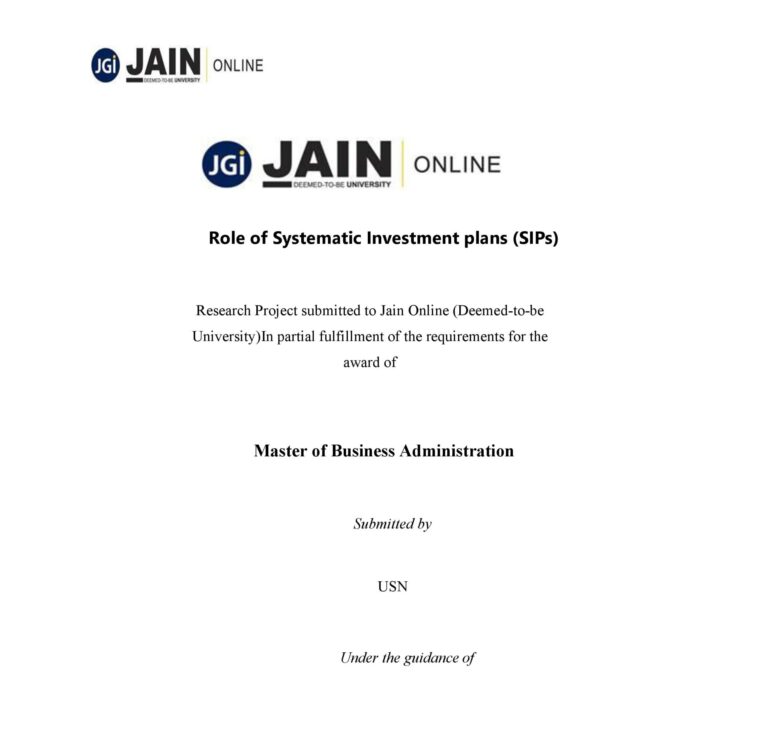
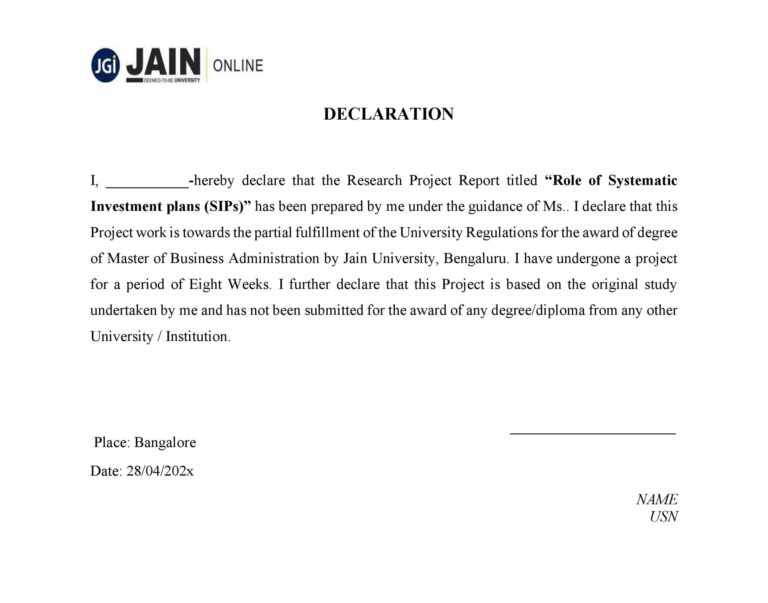
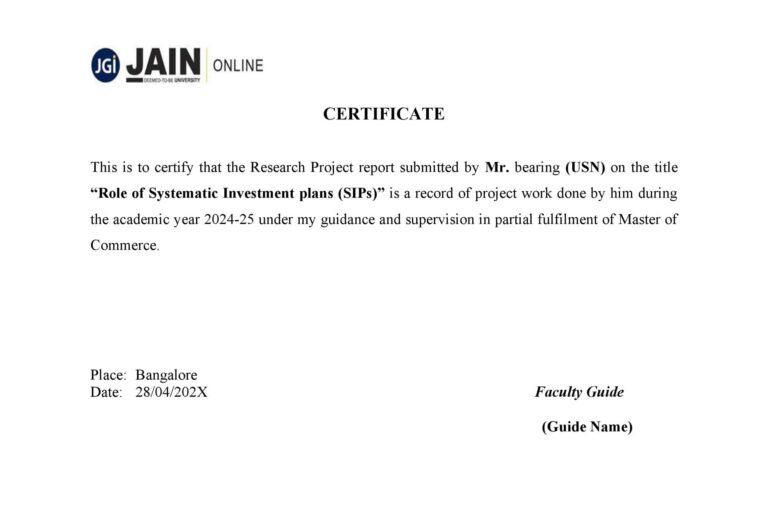
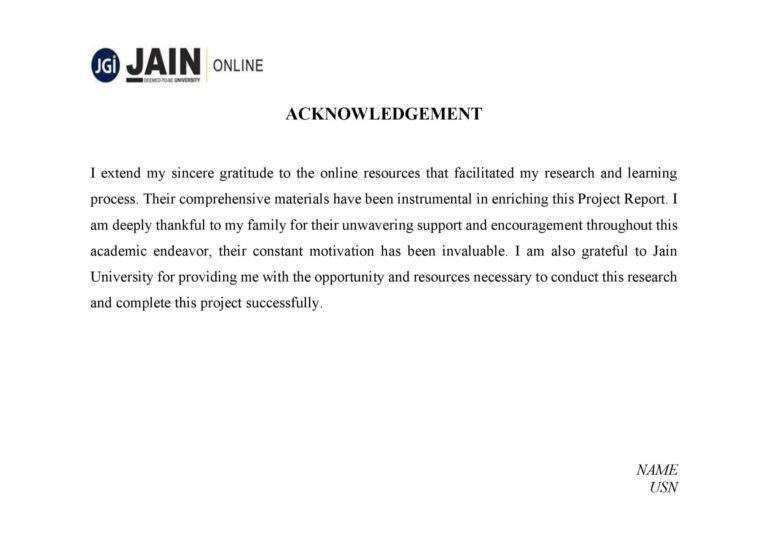
MBA PROJECT REPORT COMPONENTS
1. Introduction:
A good introduction is the foundation of any successful MBA project. It establishes the main research problem, highlights the significance of the study, and states the objectives and scope. This section makes sure that your project aligns with actual business problems and academic needs.
Key Elements of a Good Introduction:
- Research Context: Industry, company, or market trend background.
- Problem Statement: What business problem is the project trying to solve?
- Objectives of the Study: The well-defined objectives that the study seeks to attain.
- Scope & Relevance: Why is this study important to businesses, scholars, and practitioners in the industry?
By defining these areas clearly, your introduction lays the foundation for thorough analysis and insightful findings.
2. Company or Industry Analysis:
This section gives an in-depth description of the company or industry being researched, e.g., market positioning, competition, and strategic expansion opportunities. In-depth analysis of the industry adds credibility and value to the project.
Key Elements:
- Company Overview: Company history, mission, vision, and major milestones.
- Market Positioning: Brand perception, target segment, and competitive advantage.
- Industry Trends: Existing market trends and upcoming business opportunities.
Strategic Frameworks:
- SWOT Analysis: Strengths, Weaknesses, Opportunities, and Threats.
- PESTEL Analysis: Political, Economic, Social, Technological, Environmental, and Legal business impacting factors.
- Porter’s Five Forces: Competitor rivalry and industry appeal.
Using such models, firms will be able to understand the business environment evidenced based and take well-informed decisions.
3. Literature Review:
Literature review incorporates knowledge from business case studies, industry studies, and scholarly studies. It becomes your MBA project’s theoretical framework through reading current studies and identifying gaps in research.
A Good Literature Review Includes:
- Review of Previous Research: An assessment of existing studies that pertain to your subject.
- Theory Frameworks: Most influential business theories applicable to marketing, strategy, finance, HRM, or operations.
- Industry Trends & Innovations: New business models, digitalization, and disruptive technologies.
- Research Gaps: Areas of research that are yet to be explored and where your research can provide new insights.
- Good literature review adds credibility to your project and provides a clear direction to your research.
4. Research Methodology:
A proper research methodology ensures accuracy, validity, and reliability of your MBA project results. This section describes the research methodology, data collection techniques, and analytical tools employed in the research.
Key Research Methodology Elements:
- Research Approach:
- Quantitative: Statistical analysis of data through surveys, statistical packages, and numbers.
- Qualitative: Interviews, case studies, and business observations.
- Mixed Methods: Use of both for detailed information.
- Data Collection Techniques:
- Primary Data: Surveys, interviews, and focus groups.
- Secondary Data: Financial reports, company reports, industry reports.
- Sampling Techniques: Choosing the appropriate group of participants for accurate representation.
- Analytical Tools:
- SPSS, Excel, Tableau: For statistical analysis and data visualization.
- Thematic Analysis: For qualitative interpretation of data.
This systematic process ensures your research is valid, well-documented, and effective.
5. Data Analysis and Interpretation:
This section exemplifies the results of your research, translating trends, patterns, and business understanding. Good data analysis transforms raw data into good business plans.
- Statistical Tools: SPSS, Excel, Python for quantitative research.
- Visual Representations: Graphs, charts, and tables to better understand.
- Comparative Analysis: Benchmarking industry standards and competitive strategies.
- Trend Analysis: Identifying areas of growth and shifts in the market.
- Data interpretation bridges the findings to the research objectives, providing practical solutions to business issue
6. Research Findings:
This segment presents the culmination of findings from analyzed data, combining the top business strategies, fiscal realities, and operating recommendations.
Key Findings:
- Business Performance: Trends in revenue, profitability, and market growth.
- Consumer Insights: Customer behavior, brand loyalty, and behavioral patterns.
- Operational Efficiencies: Cost reduction measures, process improvements.
- Strategic Recommendations: Implementable items for business expansion.
- Providing concise, fact-based findings, this segment allows businesses to make well-informed decisions and drive future growth.
7. Conclusion:
The conclusion captures the findings and provides an outline of the wider implications of the research for business and industry players.
Components of a Good Conclusion:
- Summary of Findings: Brief summary of study outcomes.
- Practical Implications: Suggestions for companies to apply these findings to their growth.
- Future Research Scope: Where future research and investigation should be focused.
- Final Thought: A good final statement reminding us why the research is important.